
Safety and quality
Safe work near a live network starts with a plan
The networks we build often cross energised lines, roads and existing utilities. That is why we plan safety and quality before we arrive on site, not after the fact.
Approach
The rules we apply on every site
Work on power equipment is subject to detailed regulations and network operators' requirements. Here we outline, in general terms, how we organise safety, quality control and protection of the land — so clients know what to expect from us.
Staff carrying out power network work hold the qualifications required for this type of work, and before starting they receive a briefing on the specific work site and its hazards.
Safety
How we organise work near live networks
Work orders
Work on and near power equipment is carried out under work orders issued in line with the network operator's procedures, with a clearly defined scope, work site, responsible persons and safety measures.
Outages agreed with the DSO
Where required, we work on a de-energised section of the network. Outage dates are agreed with the operator in advance, and the work site is prepared to its requirements — isolation, proving dead and earthing.
Zones and clearances
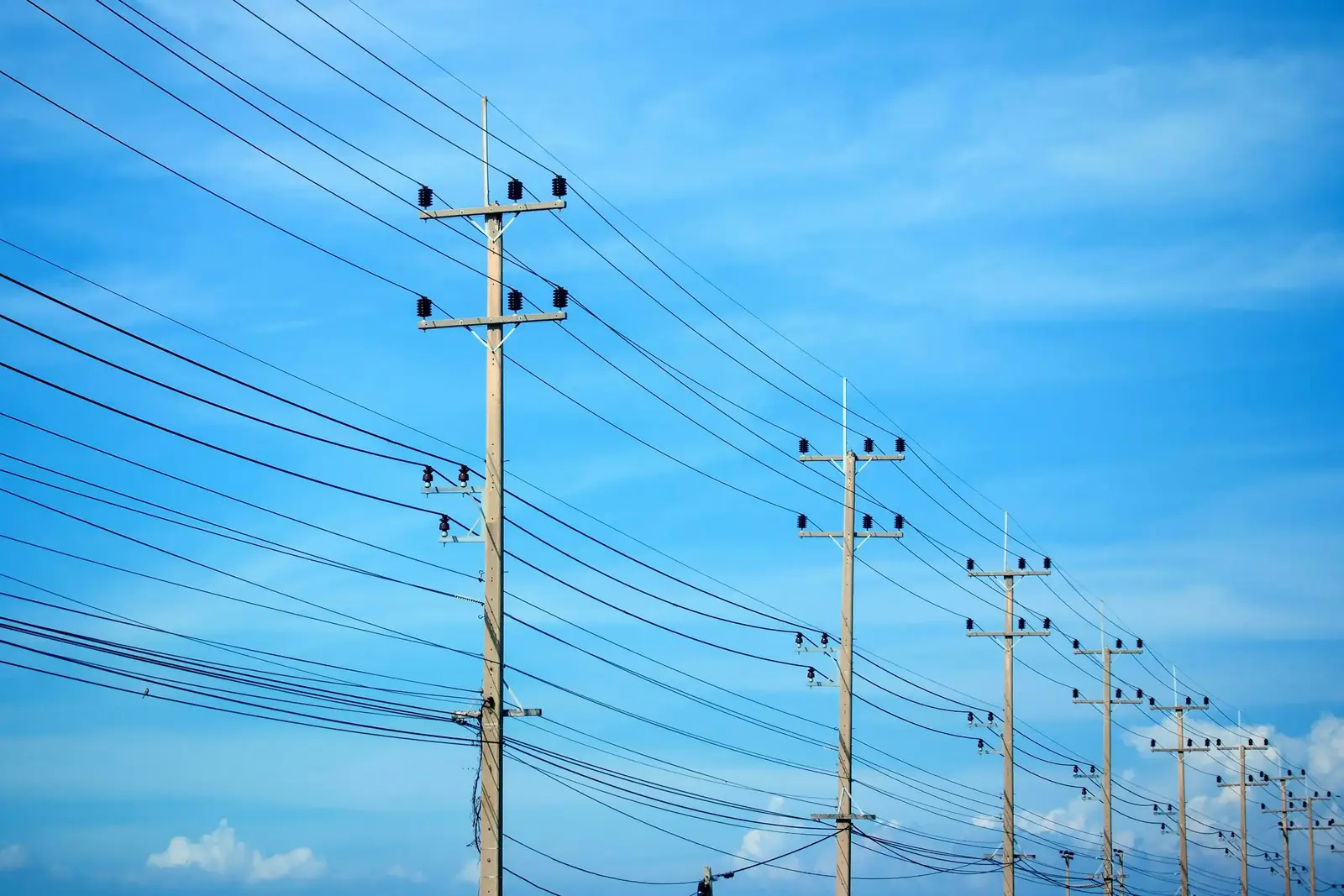
We define and mark work zones near energised equipment. When operating plant under or beside an overhead line, we keep booms and loads at safe distances.
Protective equipment
Crews wear personal protective equipment suited to the task. Insulating equipment, voltage detectors and portable earths are kept in working order and tested as required.
Existing utilities
Before digging we check the records and locate existing services. Near them we dig by hand or with great care, and when drilling we track the bore path continuously.
Signage and traffic management
Trenches are protected with barriers and signs. Works in the road are carried out to an approved temporary traffic management plan, keeping safe passage for pedestrians and vehicles.
Quality
Quality control: materials, installation, testing, documents
We build networks for decades of service, so we check quality at every stage. We use materials that meet the network operator's requirements and the design — cables, joints, terminations, junctions and substations supplied with certificates and declarations that go into the acceptance documents.
Cables are laid within permissible bending radii and pulling forces, at the right depth, with bedding, protection and warning tapes. Joints and terminations are installed according to the accessory manufacturers' instructions. Work that will be covered up is inspected before backfilling, and once installation is complete we carry out tests and measurements, recording the results in test reports.
The documents handed over at acceptance are described on the How we work page. For more on the cables themselves, see MV cables: XRUHAKXS and NA2XS(F)2Y.
- Materials compliant with operator requirements and the design
- Inspection of covered-up works before backfilling
- Accessories installed to manufacturers' instructions
- Acceptance tests and measurements with reports
- Geodetic as-built survey and as-built documentation
Environment
As little disturbance as possible
Drilling instead of digging
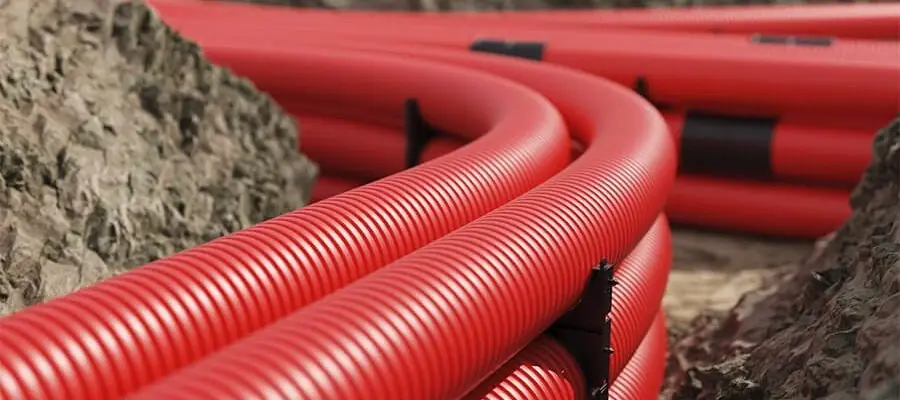
Horizontal directional drilling lets us pass under roads, watercourses, railways, trees and environmentally sensitive areas without an open trench. Across our contracts we have completed around 1.5 km of drilling and pipe jacking.
Ground restoration
After backfilling we restore the land to its original condition: we reinstate surfaces, level the ground and tidy the working strip.
Undergrounding improves the landscape
When undergrounding overhead lines we remove poles, conductors and pole-mounted substations — on the ENEA Operator contract we removed 8.266 km of MV line and 89 pole positions. Why operators do this — read the article.
Dismantled materials
Dismantled network components are sorted and handed over as the client requires — returned, or passed to licensed waste handlers.
Protecting trees and crops
We plan the working route and storage areas to limit damage to crops and trees; in root zones we prefer drilling or hand digging.
A tidy site
We limit mud on access roads, secure materials against wind and clean up after each stage of works.
In practice
Safety in the rhythm of the site
- 01
Before mobilisation
Identifying hazards along the route: crossings with overhead lines, existing cables and pipelines, road traffic. Outage plan and traffic management plan.
- 02
Before each shift
Briefing on the day's scope, task allocation, checks of plant and protective equipment. For work on equipment — preparing the work site and authorising work to start.
- 03
During the works
Supervision by the works manager and crew leader, checks on trench signage, prompt response to changes on site.
- 04
On completion
Securing or backfilling trenches, tidying the site, closing the work and handing equipment back in line with the operator's procedure.
„The above works carried out by BIGBUD Sp. z o.o. were performed properly, in accordance with good construction practice, within the agreed deadlines and without defects.”
Questions
Questions about safety and quality
Do you work near energised lines?
Work near live equipment is organised to the network operator's requirements — under a work order, with defined zones and, where required, on an isolated and earthed section of the network.
What materials do you use?
Materials that comply with the design and with the requirements of the operator who will take the network into service. Material certificates and declarations are handed over with the acceptance documents.
How do you demonstrate the quality of the works?
Through inspection of covered-up works, acceptance tests and measurements with reports, and the geodetic as-built survey. All our references confirm the works were carried out properly and without defects — you can read them on the References page.
How do you limit damage to the land?
We use directional drilling under obstacles, plan access and storage routes, and after the works we reinstate surfaces and tidy the site.
See also
How we work
How BIGBUD delivers MV/LV cable lines and substations: quotation, site preparation, works, testing, as-built documentation and acceptance by the DSO.
Learn moreHorizontal directional drilling
Horizontal directional drilling and pipe jacking under roads, railways and rivers — ducts for MV, LV and fibre cables. Own Tracto-Technik GRUNDODRILL rig.
Learn moreEquipment
BIGBUD's own plant for MV/LV network works: CAT 302.7 mini excavator, CAT 432 backhoe loader, Tracto 15 XPT HDD rig, Tesmec puller and Volvo crane truck.
Learn moreA safety-minded contractor for your project
Describe the scope and site conditions — we will propose a technology and work plan that keeps outages and ground disturbance to a minimum.