
Horizontal directional drilling
Under roads, rivers and railways — without digging them up
We carry out directional drilling and pipe jacking for MV and LV cable lines and fibre-optic ducts. Our own Tracto-Technik GRUNDODRILL 15 XPT rig and around 1.5 km of drilling and jacking confirmed by client references.
How the technology works
Directional drilling in three steps
Horizontal directional drilling (HDD; in Polish przewiert sterowany) is a trenchless method of installing pipes beneath obstacles. From an entry pit, the rig drives drill rods fitted with a steerable head into the ground. The head's position is tracked continuously from the surface, and the operator corrects its direction so that the pilot bore avoids existing services and exits at the planned point.
The bore is then enlarged by reaming and, finally, as the rods are withdrawn, the protective ducts that will later carry the cable are pulled in. Drilling fluid is used throughout to stabilise the bore, cool the tool and carry away the cuttings. We explain the technology in more detail in How directional drilling works.
Drilling is used wherever an open trench is impossible, costly or disruptive: under roads and driveways, railways, watercourses and drainage ditches, tree belts or fenced properties. Traffic keeps moving, the road surface stays intact and reinstatement is limited to the entry and exit pits. Short, straight crossings can also be done by pipe jacking.
- Crossings under roads, driveways, railways and watercourses
- Protective ducts for MV, LV and fibre cables
- Drilling as a stand-alone service or as part of a cable contract
Plant and scope
What we offer
Our own rig
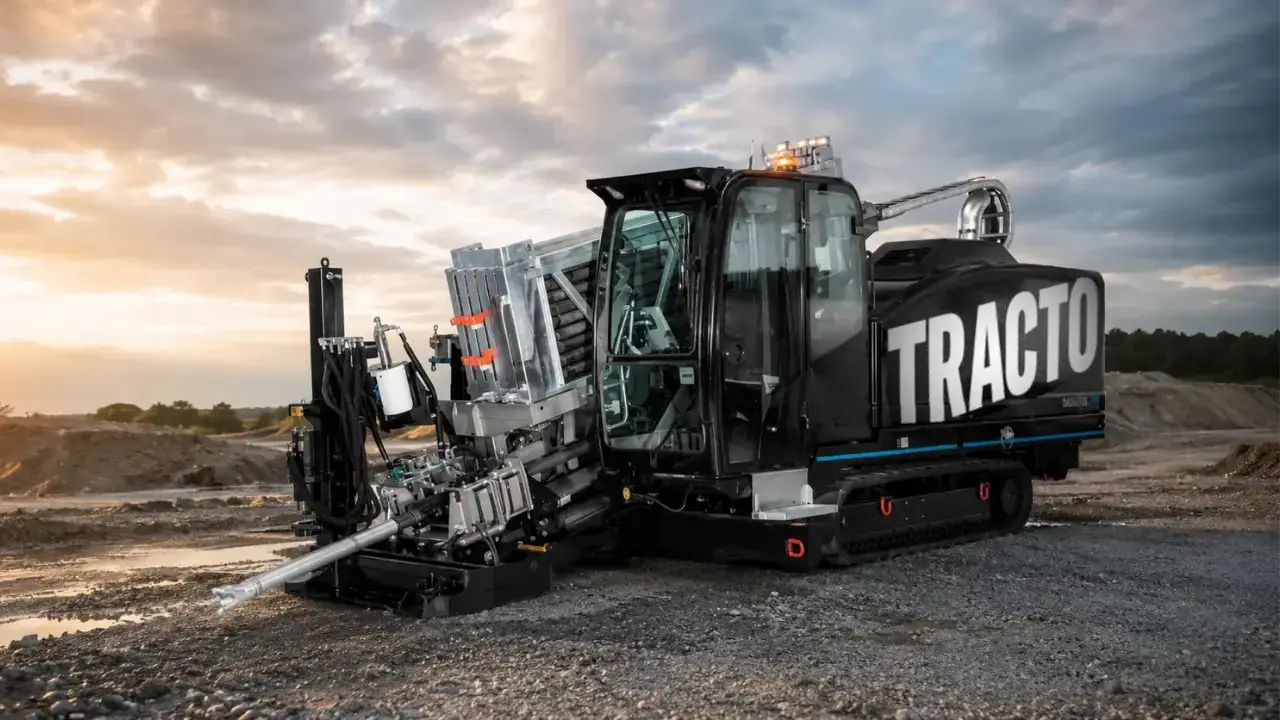
A compact Tracto-Technik GRUNDODRILL 15 XPT directional drilling rig, designed for utility crossings for cables and pipes in urban and rural settings.
Route investigation
Before drilling we identify existing services from maps and on site, and dig trial holes where needed.
Steering the bore
The head is located from the surface and its direction corrected as we go — the bore avoids obstacles and exits where planned.
Protective ducts
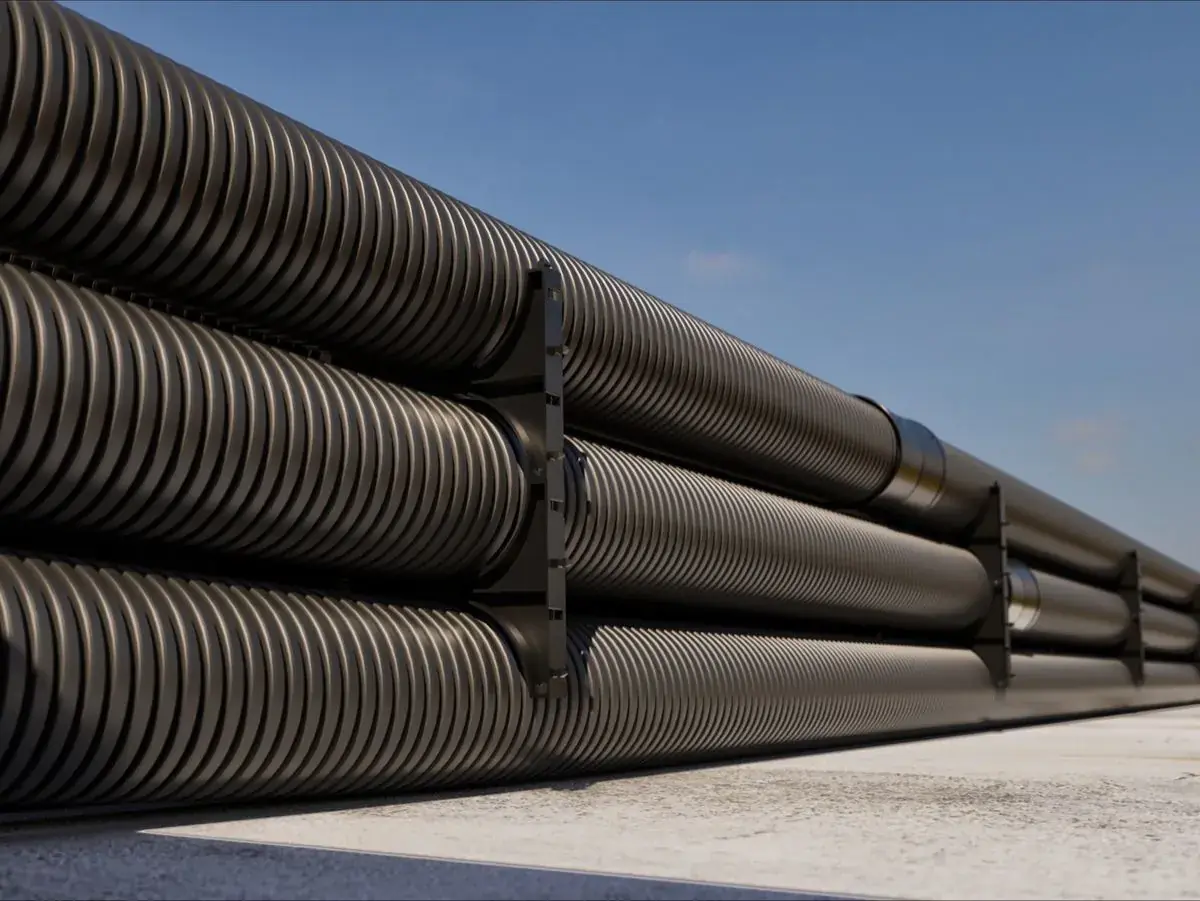
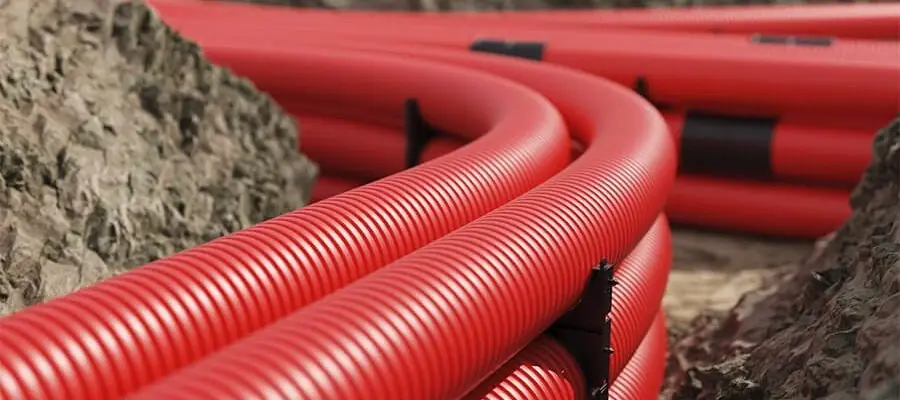
Pulling in ducts suitable for drilling, singly or in bundles — according to the design and the number of cable circuits.
Entry and exit pits
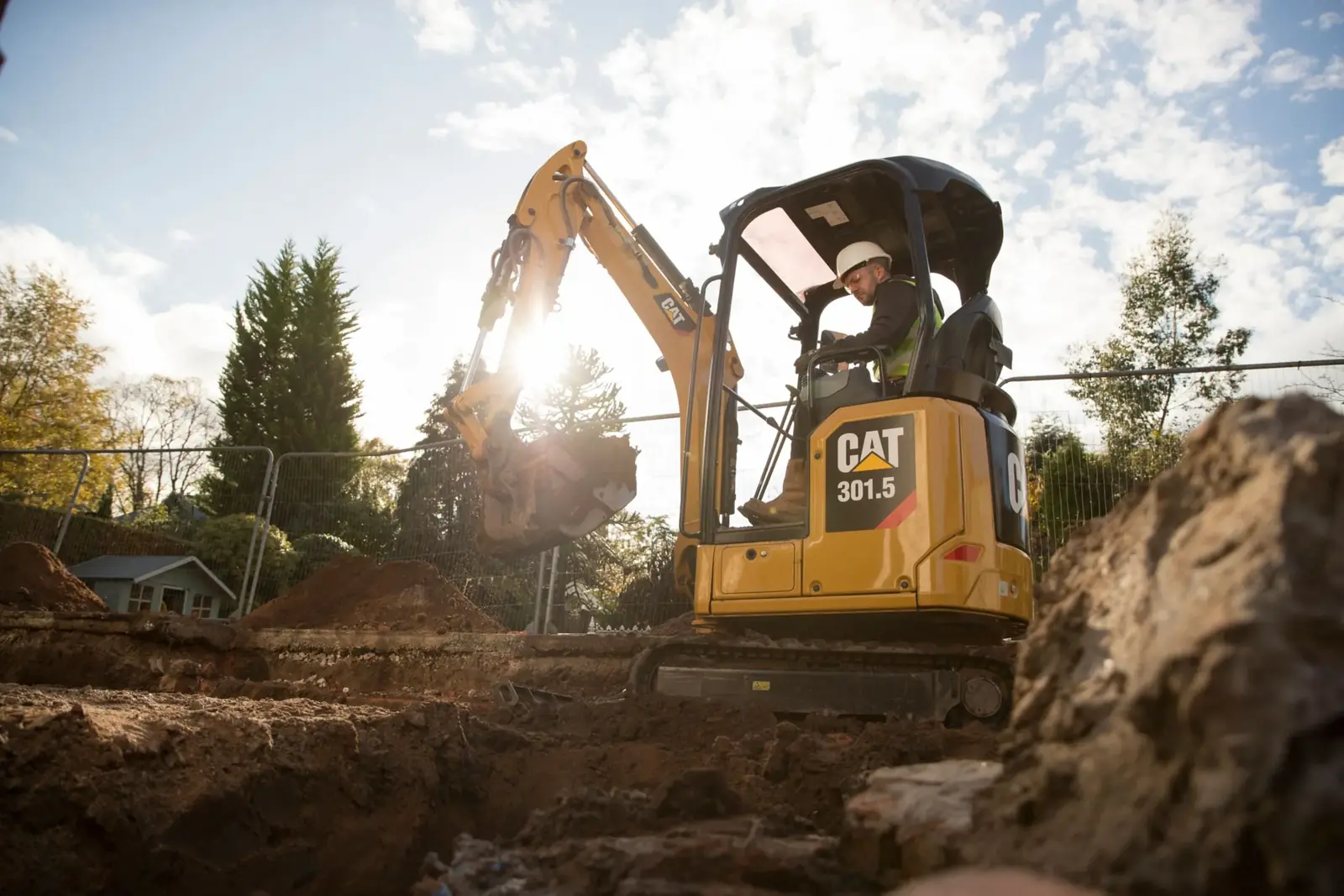
Dug with our own CAT excavators; once the work is done we restore the land to its original condition.
A service for other contractors
We carry out drilling only for general contractors and network builders — with our own rig and operator.
How the works run
How we carry out a bore
Design check
We review the profile and length of the crossing, the type of ground and the position of existing services, and fix the entry and exit pit locations.
Scope of works
- map and design review
- site visit
- choice of ducts and tooling
Result
- drilling plan
Arrangements
We agree the crossing with the road, rail or watercourse authority and prepare traffic management and protection around the pits.
Scope of works
- notices to authorities
- traffic management
- setting out the bore line
Result
- consent to proceed
Pilot bore
From the entry pit the rig steers the head along the planned path, with its position constantly monitored from the surface.
Scope of works
- rig set-up
- mixing drilling fluid
- drilling with tracking
Result
- pilot bore
Reaming and pullback
The bore is enlarged to suit the ducts, which are pulled in as the rods are withdrawn.
Scope of works
- reaming
- pulling in ducts
- checking duct clearance
Result
- ducts beneath the obstacle
Cabling and completion
Cables are pulled through the ducts (by us or another contractor), duct ends are sealed, pits backfilled and the land reinstated.
Scope of works
- cable pulling
- sealing ducts
- reinstatement
Result
- finished cable crossing
Survey and documentation
We pass the bore profile data to the as-built geodetic survey and the handover documentation.
Scope of works
- bore profile record
- geodetic survey
- reports
Result
- as-built documentation
Comparing methods
Directional drilling, pipe jacking or open trench?
The right method depends on crossing length, ground, existing services and the land owner's requirements. The comparison is general.
| Criterion | Directional drilling (HDD) | Pipe jacking | Open trench |
|---|---|---|---|
| Typical use | Longer crossings under roads, watercourses, railways, tree belts | Short, straight crossings, e.g. under a driveway or local road | Open land with no obstacles |
| Route steering | Yes — the bore can avoid obstacles and change depth | Limited or none | Full visual control |
| Surface disturbance | Entry and exit pits only | Launch and reception pits | Along the whole length |
| Traffic disruption | Minimal | Minimal | Lane closure or diversion needed |
| Surface reinstatement | Small | Small | Across the full trench width |
When to choose drilling
Less disruption, a shorter build
On a cable line, crossings under roads and watercourses are usually the most demanding part of the route. An open trench across a carriageway means closing a lane, diversions, reinstating the road construction and longer negotiations with the highway authority. Directional drilling avoids all of that — traffic carries on as normal and the impact on the ground is limited to two small pits.
On our cable contracts to date, trenchless crossings have made up a significant part of the route: around 600 m on a 5,725 m line for the Toruń undergrounding, and around 550 m on a 5,606 m line for the MV/LV network rebuild across eight villages near Międzychód, including pipe jacking with SRS Ø160 pipes. In Konin directional drilling totalled around 350 m.
Having our own rig means we do not depend on the availability of drilling subcontractors — we can schedule drilling to run in parallel with trenching on the rest of the route. We also drill as part of fibre-optic duct and utility relocation work.
Projects
Drilling on our contracts
Directional drilling and pipe jacking formed part of three of our contracts: around 600 m in Toruń, around 550 m (including SRS Ø160 jacking) near Międzychód and around 350 m in Konin.
Toruń — MV 15 kV line undergrounding
Kuyavian-Pomeranian Voivodeship
MV/LV network rebuild — 8 villages
Greater Poland / Lubuskie Voivodeships
Konin — RS Maliniec 15 kV switching station
Greater Poland Voivodeship
„The above works carried out by BIGBUD Sp. z o.o. were performed properly, in line with good construction practice, on the agreed dates and without defects.”
Photos
From our sites
Questions
Directional drilling — frequently asked questions
Do you carry out drilling only, for other contractors?
Yes. Drilling can be a separate order — we arrive with the rig, an operator and an excavator for the pits, and the cable is laid by the client or by us, as agreed.
What rig do you use?
Our own GRUNDODRILL 15 XPT directional drilling rig made by Tracto-Technik. It is a compact machine designed for utility crossings for cables and pipes. What it can achieve on a specific crossing — length, duct diameter, ground — we discuss once we have reviewed the design. See also our equipment page.
What is the difference between directional drilling and pipe jacking?
Directional drilling lets you monitor and correct the path of the bore, so it suits longer crossings and avoiding obstacles. Pipe jacking is a simpler method for short, straight crossings, with no or limited steering.
Is drilling possible in any ground?
In most ground found on network projects, yes — although ground conditions affect progress and the choice of tooling. Large stones, rubble and made ground can cause difficulties, which is why we ask about ground investigation or look at the site before pricing.
What documents does the client receive?
We pass the bore profile data to the as-built geodetic survey; together with the reports, it goes into the contract's handover documentation.
See also
Related topics
How directional drilling works
How horizontal directional drilling works: pilot bore, reaming, duct pullback and bentonite. When HDD is used, how it differs from pipe jacking, and its limits.
Learn moreMV and LV cable lines
Construction, rebuilding and repair of MV 6–30 kV and LV 0.4 kV cable lines: trenching, drilling, cable laying, joints, terminations, testing and handover.
Learn moreFibre-optic ducts
Fibre-optic duct construction: HDPE ducts and microducts, cable chambers, directional drilling under roads and railways. Civil works contractor across Poland.
Learn moreNeed a crossing drilled?
Tell us the location, crossing length and duct type — we will send a quote and a date.