
MV and LV cable lines
Medium- and low-voltage cable lines
We build, rebuild and repair MV 6–30 kV and LV 0.4 kV cable lines — from setting out the route, through trenching and drilling, to joints, terminations, testing and the as-built survey. 24.8 km of MV lines confirmed by client references.
What the service covers
Cable in the ground instead of conductors on poles
A cable line is an underground section of the power network: cable laid in a trench or in protective ducts, connected with joints and terminated in a substation, a junction or on a pole. Medium-voltage networks most often use single-core cables with cross-linked polyethylene (XLPE) insulation, laid in groups of three per circuit; LV networks use multi-core cables.
New cable lines are needed to supply a new substation or customer, to export power from a renewable plant, to replace an unreliable overhead line or to clear a conflict with a planned road or building. Cable lines are far less exposed to wind, ice and falling trees, take up no space above ground and make land easier to use — which is why operators are steadily increasing the share of cable in their MV networks.
We cover the full scope: site preparation, earthworks and directional drilling, installation of accessories, voltage tests and handover for operation. We can deliver the whole contract or act as a subcontractor for a defined part of it.
- MV 6–30 kV lines (including 15 kV and 20 kV) and LV 0.4 kV lines
- New lines, rebuilding and repair of existing ones
- XRUHAKXS, NA2XS(F)2Y and other cables as per the design and operator requirements
Scope of works
What we deliver on a cable line
Earthworks
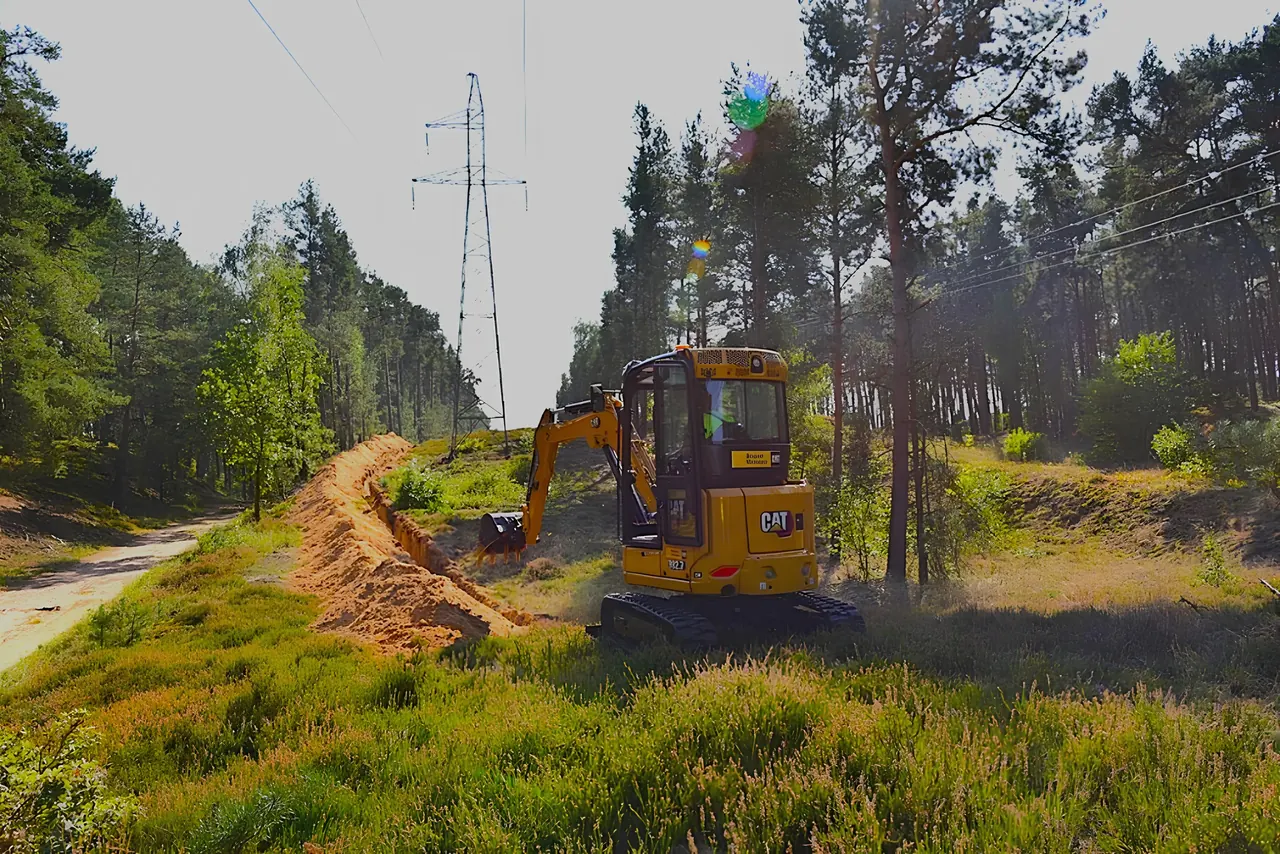
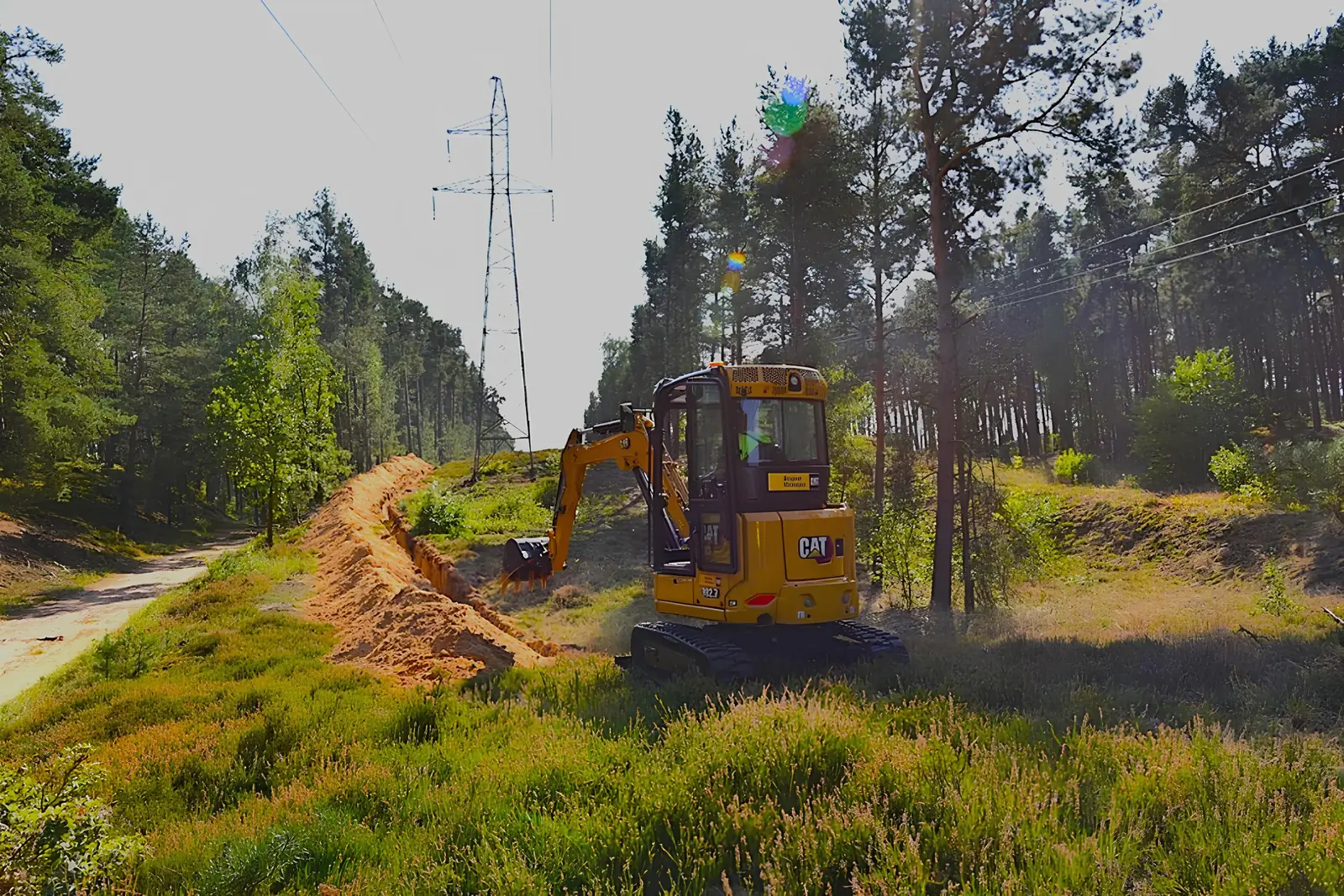
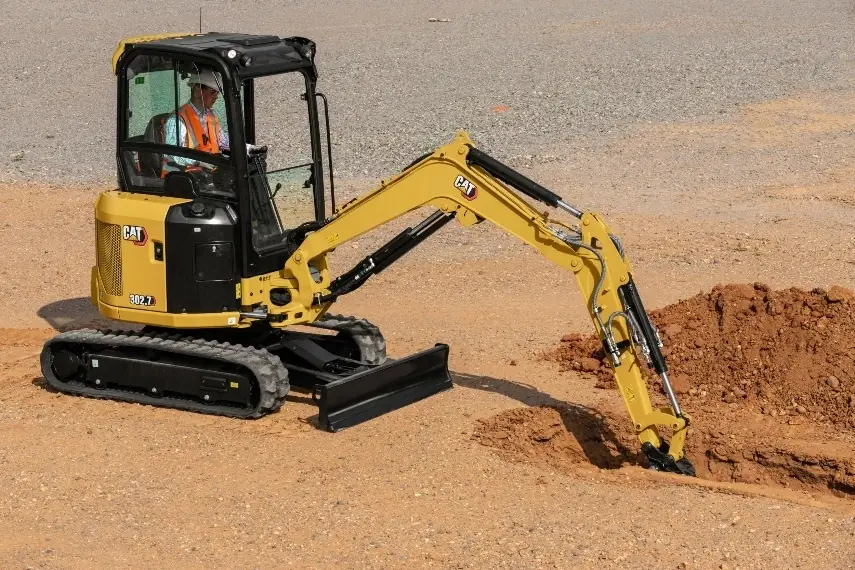
Machine and hand digging (near existing services), bedding and backfill, warning tape, reinstatement of surfaces and land.
Drilling and pipe jacking
Crossings under roads, driveways, watercourses and railways with our own HDD rig — without stopping traffic. More: directional drilling.
Cable laying
Unreeling cable from drums, pulling through ducts with controlled pulling force, laying in trefoil or flat formation as designed.
Joints and terminations
MV and LV straight joints, indoor, outdoor and connector (plug-in) terminations — fitted by experienced jointers following the accessory manufacturer's instructions.
Junctions and connections
Installation of MV cable junctions (ZKSN) and LV pillars, cable entries into substations and switching stations, connections to overhead lines.
Testing and documentation
Insulation resistance measurements and sheath voltage tests, test reports, as-built geodetic survey and a full set of handover documents.
How the works run
Building a cable line, stage by stage
The sequence is similar for every line; what changes is the route length, the number of obstacles and the client's requirements.
Design check and preparation
We walk the route to check the detailed design: alignment, conflicts with existing services, drilling locations and joint positions. We then fix the programme and order materials.
Scope of works
- route walkover
- design and quantities check
- programme and delivery plan
Result
- design comments
- works programme
Permits and arrangements
We notify landowners and road authorities, prepare temporary traffic management and agree outage and switching dates with the operator.
Scope of works
- road occupation notices
- traffic management plan
- setting out by a surveyor
Result
- site ready to start
Earthworks and drilling
Trenches are dug by excavator, and by hand close to existing networks. Under roads, driveways and watercourses we drill and pull in protective ducts.
Scope of works
- trenching and bedding
- HDD and pipe jacking
- ducts at crossings
Result
- route ready for cable
Cable laying
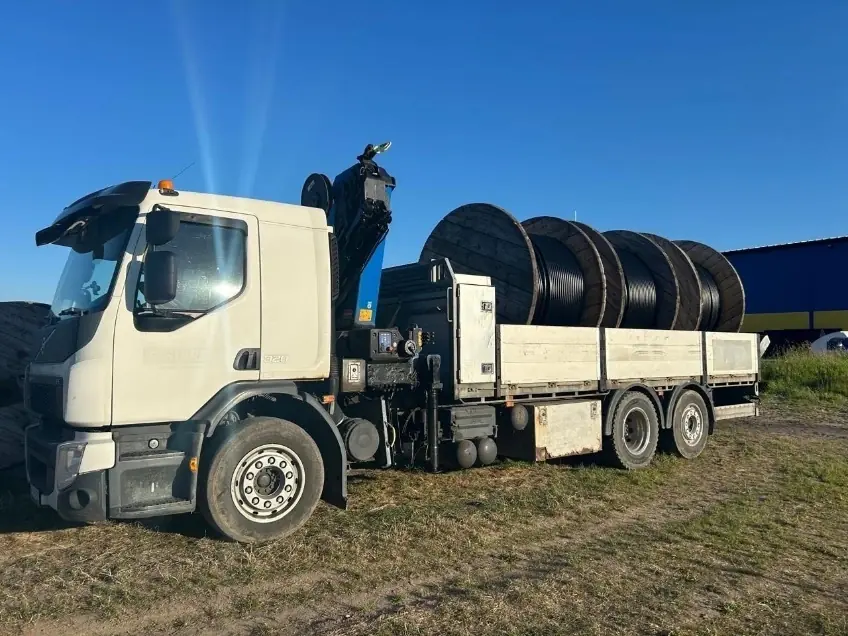
Drums arrive on our own crane truck. Cable is unreeled with controlled bending radius and pulling force, using a puller on longer runs. The trench is then backfilled in layers with warning tape.
Scope of works
- drum transport and unreeling
- pulling through ducts
- backfill and route marking
Result
- cable line in the ground
Joints, terminations and connections
We joint the cable sections, fit terminations in substations, junctions and on poles, install ZKSN and LV junctions, and — as agreed with the operator — connect the line to the network.
Scope of works
- straight joints
- indoor, outdoor and connector terminations
- junction installation
Result
- complete line ready for testing
Testing, acceptance and documentation
We carry out acceptance measurements and tests, commission the as-built geodetic survey and compile the handover file required by the client.
Scope of works
- insulation and voltage tests
- geodetic survey
- as-built documentation
Result
- acceptance reports
- network handed over for operation
Technical solutions
Typical cables and cable line components
The final choice of cables and accessories follows the design and the operator's standards. The table is indicative only.
| Component | Typical solution | Use |
|---|---|---|
| MV XLPE cable | XRUHAKXS 1×120…240 mm² (Al conductor, Cu wire screen, longitudinal water blocking, PE sheath) | MV 15–20 kV lines; three single-core cables per circuit. Used in Toruń and Konin, among others |
| MV cable to DIN/VDE designation | NA2XS(F)2Y 1×150/25 mm² (Al conductor, XLPE insulation, Cu screen, longitudinal water blocking, PE sheath) | MV lines; used on the network rebuild around Międzychód |
| LV cable | Multi-core cables sized in the design, e.g. 4×150 mm² or 4×25 mm² | 0.4 kV networks, supply to junctions and customers |
| Joints | Heat-shrink or cold-shrink straight joints | Connecting cable lengths between drums, repairs |
| Terminations | Indoor, outdoor and connector (plug-in) | Ends in switchgear and substations, on poles, in junctions |
| Junctions | ZKSN (MV cable junctions), LV cable pillars | Network branches and open points, customer supplies |
| Protective ducts | Smooth and corrugated ducts, drilling pipes (e.g. SRS) | Road and utility crossings, directional drilling |
Projects
Cable lines we have built
Every contract we have delivered so far included building MV cable lines — 24.8 km of route in total, from 2,350 m in Bolewice to 3 × 5,715 m of single-core cable for ENEA Operator.
ENEA Operator — MV 20 kV network, Niegosławice
Lubuskie Voivodeship
Toruń — MV 15 kV line undergrounding
Kuyavian-Pomeranian Voivodeship
Konin — RS Maliniec 15 kV switching station
Greater Poland Voivodeship
MV/LV network rebuild — 8 villages
Greater Poland / Lubuskie Voivodeships
Bolewice — MV 15 kV cable line
Greater Poland Voivodeship
„The above works carried out by BIGBUD Sp. z o.o. were performed properly, in line with good construction practice, on the agreed dates and without defects.”
Photos
From our sites
Questions
Cable lines — frequently asked questions
Which cable line voltages do you build?
Medium-voltage lines of 6–30 kV — most often 15 kV and 20 kV in practice — and low-voltage 0.4 kV lines. On the ENEA Operator contract we built both an MV 20 kV line and LV cable lines.
How long does it take to build a cable line?
That depends on route length, the number of crossings, ground conditions and outage dates. As a guide: we completed the 2,350 m MV 15 kV line in Bolewice in 18 days (25 Nov – 12 Dec 2024), and 5,725 m of line in Toruń in under two months (30 Sep – 25 Nov 2024).
We give a realistic programme in our quote once we have reviewed the design.
Can cable be laid in winter?
XLPE cables have a minimum laying temperature set by the manufacturer; in cold weather the drums are warmed before unreeling or laying is moved to milder days. Our contracts for ENEA Operator and around Międzychód also ran through the winter months, with the work planned around the weather.
Do you repair damaged cables?
Yes. We excavate, cut out the damaged section, fit joints or a cable insert and, after the repair, carry out measurements to confirm the line is sound.
Who supplies the cable and accessories?
Either way works. Materials may be supplied by the client (common on operator contracts) or by us, through our equipment supply service, in line with the design.
What documents does the client receive at the end?
Test and measurement reports, the as-built geodetic survey, as-built documentation and material certificates — in the scope and format required by the client or operator.
See also
Related topics
MV cables: XRUHAKXS and NA2XS(F)2Y
MV cables XRUHAKXS and NA2XS(F)2Y explained: construction, how to read the designations, conductor and screen sizes, voltage ratings and use in 15–20 kV lines.
Learn moreHorizontal directional drilling
Horizontal directional drilling and pipe jacking under roads, railways and rivers — ducts for MV, LV and fibre cables. Own Tracto-Technik GRUNDODRILL rig.
Learn moreOverhead line undergrounding
Undergrounding of MV and LV overhead lines: new cable line, HDD crossings, ZKSN junctions, switching and removal of the old line, poles included.
Learn moreA cable line to price?
Send us the design, bill of quantities or a route description — we will prepare a quote with a programme.