
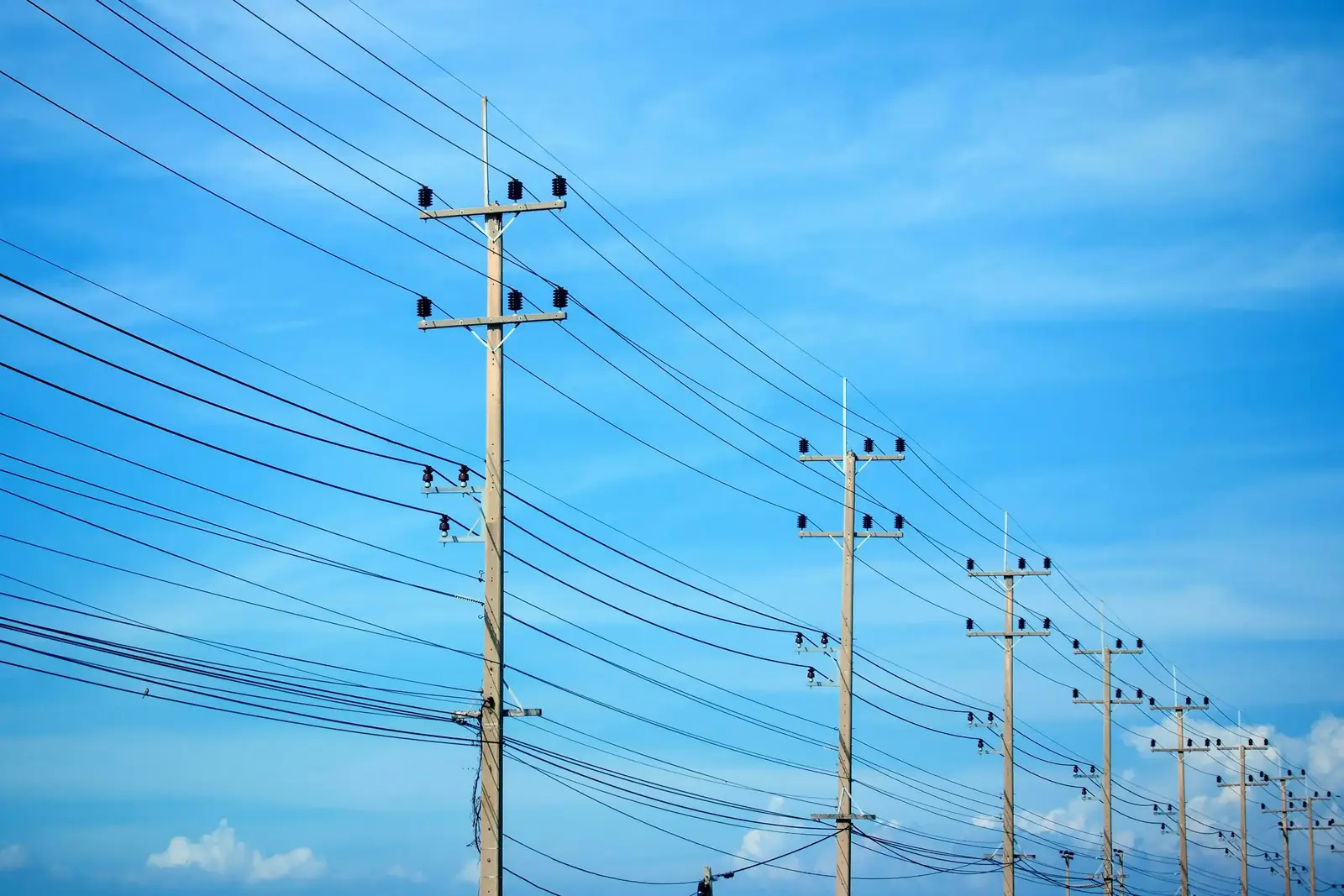
MV overhead lines
Medium-voltage overhead lines, 6–30 kV
We build and rebuild sections of MV and LV overhead lines, erect poles, make tie-ins to cable lines and remove lines taken out of service. On a single contract for ENEA Operator we dismantled 8.266 km of MV line and 89 pole positions.
What the service covers
Overhead networks still have their place
Despite ongoing undergrounding, overhead lines still make up a large part of Poland's medium-voltage network, especially in rural areas. They are cheaper to build over long open stretches and easy to inspect and repair. In practice the network is mixed: overhead sections pass into cable at poles fitted with terminations, and pole-mounted substations sit alongside ground-mounted ones.
Overhead line work is not only about building new sections. Just as often it means replacing poles, rebuilding a section that conflicts with a new scheme, erecting a cable-to-overhead transition pole, or removing a line after it has been undergrounded. Dismantling needs the same discipline as construction — conductors, fittings, poles and foundations all have to come out.
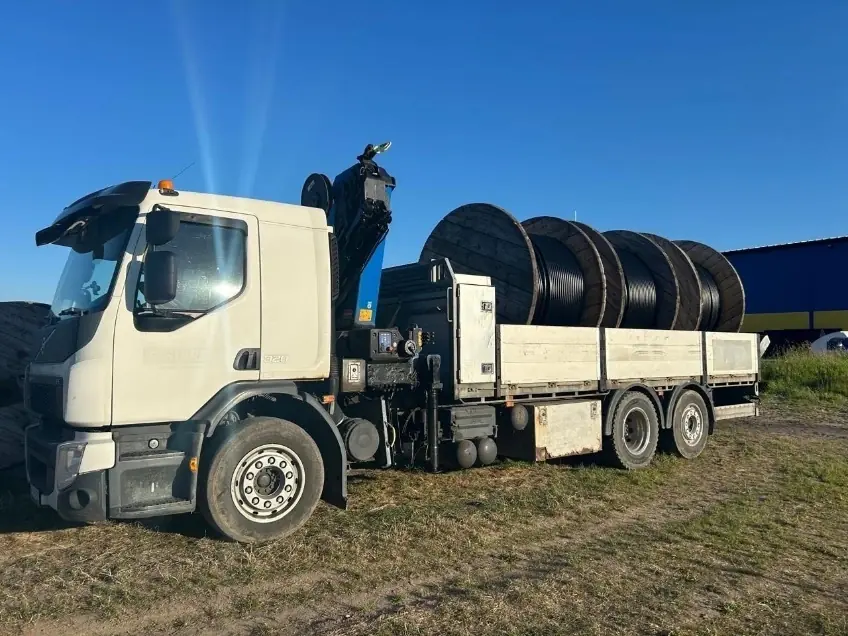
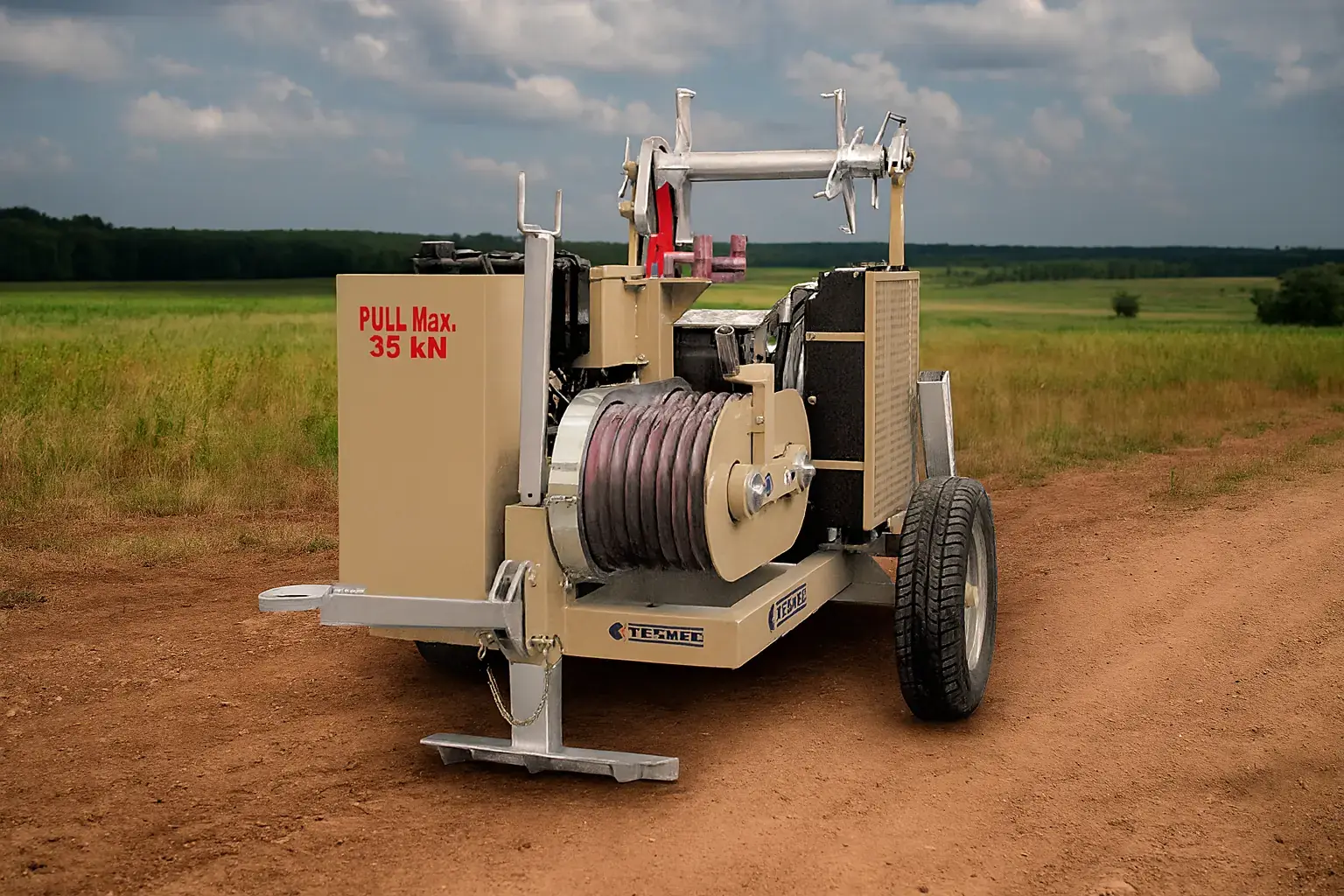
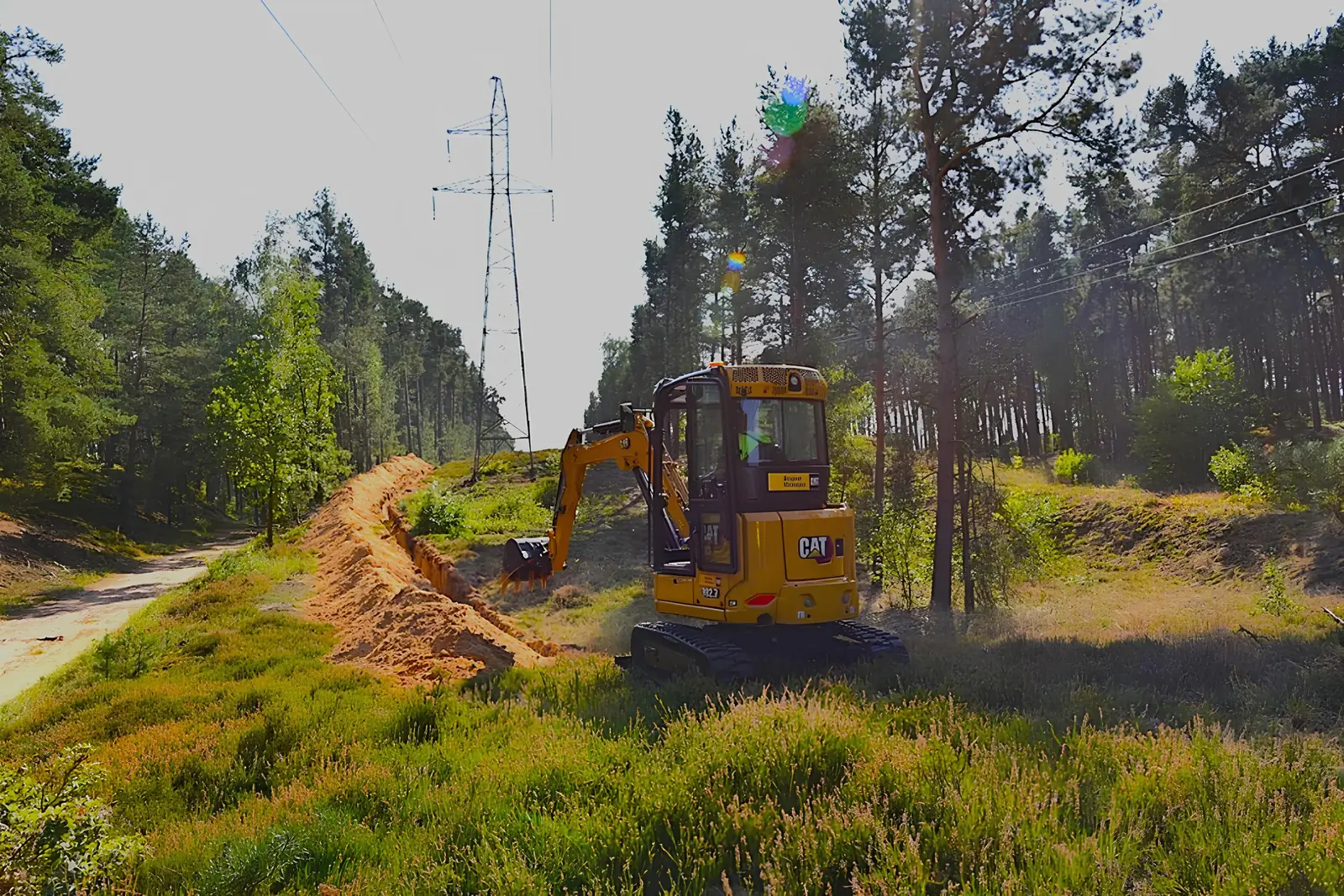
For pole and conductor work we use our own plant: a Volvo truck with a loader crane to transport and set components, CAT excavators to dig for foundations and a Tesmec hydraulic puller.
- Erection and replacement of MV and LV poles
- Transition poles with cable terminations — tie-ins to cable lines
- Removal of overhead lines, poles and pole-mounted transformer substations
Scope of works
What we do on overhead lines
MV and LV poles
Excavation and foundations, setting poles with the loader crane, fitting steelwork, crossarms and insulators as designed.
Conductors
Stringing and sagging conductors on rebuilt sections, maintaining the required sags and clearances.
Rebuilds
Rebuilding line sections where they conflict with roads, buildings or other networks. More: utility conflict relocation.
Cable-to-overhead tie-ins
Poles with outdoor terminations, surge arresters and fittings for the transition from overhead line to cable.
Dismantling
Removing conductors, poles, foundations and pole-mounted substations; taking material away and restoring the land.
Acceptance
Measurements, reports, as-built geodetic survey and the documentation required by the operator.
How the works run
How we carry out overhead line work
Design check
We check pole positions, plant access, conflicts with trees, roads and other networks and the extent of dismantling on site.
Scope of works
- site visit
- access assessment
- materials schedule
Result
- programme and delivery plan
Arrangements and outages
We agree outage dates and the way the work area will be made safe with the operator, and access with the landowners.
Scope of works
- notifications
- outage programme
- traffic management next to roads
Result
- approved work plan
Excavation and foundations
We excavate for poles and foundations — with CAT excavators, or by hand where the ground requires it.
Scope of works
- setting out pole positions
- excavation
- foundations
Result
- positions ready for poles
Poles, fittings and conductors
We set the poles with the loader crane, fit steelwork and insulators, string and sag conductors and make tie-ins to cable lines.
Scope of works
- setting poles
- fitting hardware
- stringing and sagging
Result
- complete line section
Removing retired sections
Once supply has been switched over we take down old conductors, poles and pole-mounted substations and restore the land.
Scope of works
- removing conductors
- removing poles and foundations
- material removal
Result
- land restored
Testing and documentation
We carry out measurements, compile the reports and the as-built geodetic survey and hand the line over for operation.
Scope of works
- acceptance measurements
- geodetic survey
- as-built documentation
Result
- acceptance report
Technical solutions
Typical components of MV and LV overhead lines
Indicative only — the actual solutions are set by the design and the operator's standard.
| Component | Typical solutions | Notes |
|---|---|---|
| Poles | Spun and prestressed concrete poles, single and composite structures (terminal, angle, section) | Pole type depends on its function in the line and the loads |
| MV conductors | Bare AFL conductors and covered (insulated-sheath) conductors | Covered conductors are used in wooded areas, among others |
| LV conductors | Aerial bundled cables | Standard on modern 0.4 kV networks |
| Insulation | Pin, suspension and long-rod insulators | Chosen by voltage and pole function |
| Cable tie-ins | Pole with outdoor terminations, surge arresters and a switch-disconnector | Transition from overhead line to cable |
| Pole-mounted substations | MV/LV transformer substations on poles | Often replaced by ground-mounted units when a line is undergrounded — MV/LV substations |
Safety and organisation
Working on a network that has to keep running
Most overhead line work takes place on a network that customers rely on. Planning is therefore essential: the order of works and the outage and switching dates are set by the operator, and the contractor has to be ready to complete everything planned within the outage window. Every work area is prepared and handed over in line with the operator's procedures.
Logistics matter when dismantling, too: recovered conductors, insulators, poles and substation components must be sorted, removed and handed over as set out in the contract. On long stretches through farmland and forest, plant access and minimising crop damage are important — we plan the work together with landowners.
Staff working on power equipment hold the qualifications required by law for this type of work. The safety principles we follow are described on our Safety and quality page.
Project
Building and removing overhead network for ENEA Operator
In the Niegosławice municipality we erected 2 MV poles and 1 LV pole and, once the new cable lines were in service, removed 8.266 km of MV overhead line, 89 MV pole positions, 4 LV pole positions, 90 m of LV overhead line and 3 pole-mounted transformer substations.
„The works were performed with due care, in accordance with the terms of the contract and the applicable technical requirements.”
Photos
From our sites
Questions
Overhead lines — frequently asked questions
Which overhead line voltages do you cover?
We focus on medium-voltage lines of 6–30 kV and low-voltage 0.4 kV networks. For work at other voltages, please get in touch and we will discuss the scope individually.
Do you take on dismantling only?
Yes. Removing lines, poles and pole-mounted substations can be a separate order — for example after undergrounding carried out by another contractor. On the ENEA Operator contract the dismantling covered 8.266 km of MV line and 89 pole positions.
Do you work near live networks?
We work under the arrangements agreed with the operator — with the section switched off and made safe, or at a safe distance from live parts. Outage dates are always set by the operator.
What plant do you use to erect poles?
We have a Volvo FE 320 truck with an HMF 2120 loader crane, CAT excavators and a Tesmec ARS405 hydraulic puller. The full list is on our equipment page.
Do you build complete new overhead lines?
Yes, at MV and LV. Our references to date relate mainly to cable lines, the erection of individual poles and the removal of overhead lines — so we always discuss the scope of a new contract individually.
See also
Related topics
Overhead line undergrounding
Undergrounding of MV and LV overhead lines: new cable line, HDD crossings, ZKSN junctions, switching and removal of the old line, poles included.
Learn moreWhy operators underground MV lines
Why DSOs replace MV overhead lines with underground cables: reliability, resilience to storms and icing, forests, safety — and how undergrounding is done.
Learn moreGlossary
Glossary of Polish MV and LV network terms in English: DSO, GPZ, ZKSN, joints, terminations, XRUHAKXS, NA2XS(F)2Y, HDD, substations and grid connection.
Learn moreA line to rebuild or remove?
Describe the scope or send the design — we will prepare a quote and a programme that allows for outages.