
Overhead line undergrounding
We replace overhead lines with underground cable
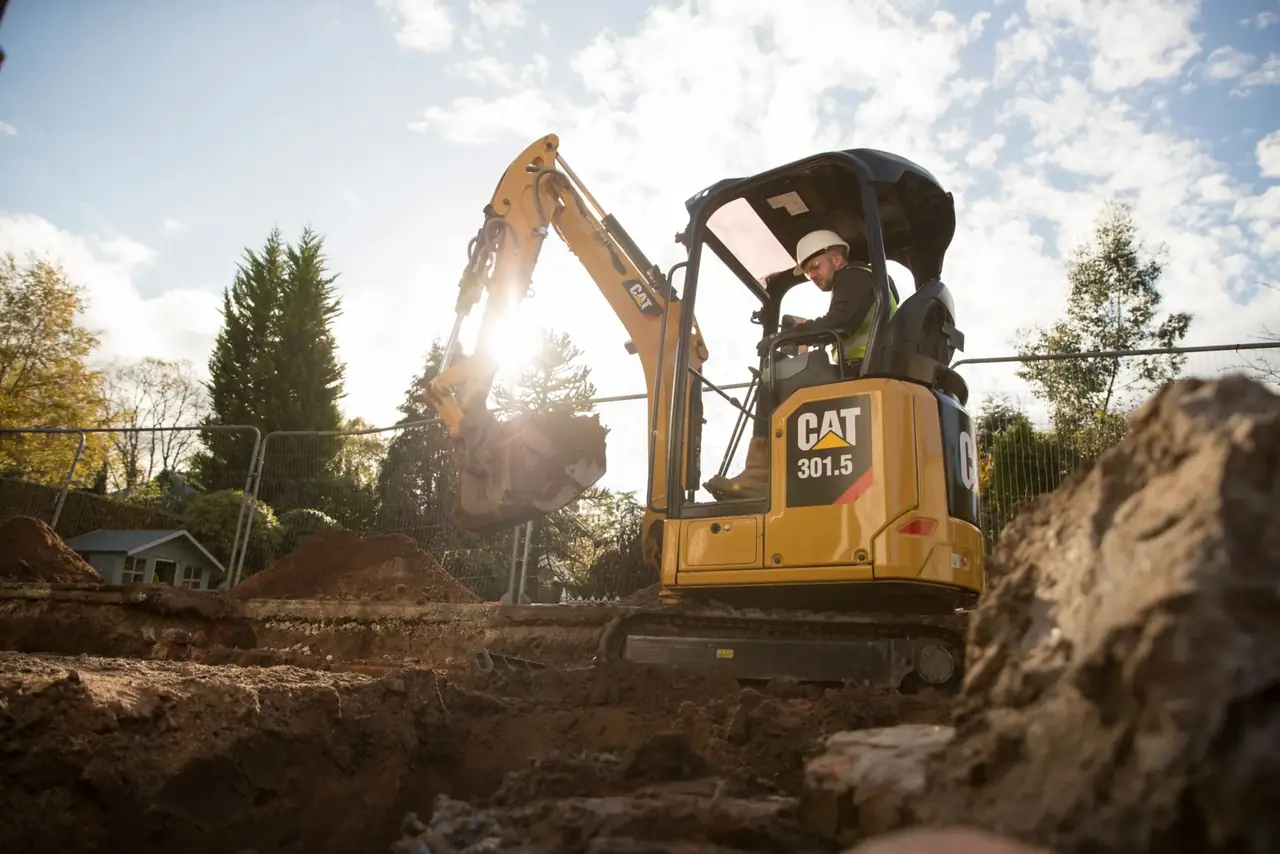
End to end: a new MV or LV cable line, drilling under roads, junctions and joints, switching customers over and removing the old line along with its poles. That is how we worked in Toruń, around Międzychód and in the Niegosławice municipality.
What undergrounding means
Fewer faults, fewer poles, more usable land
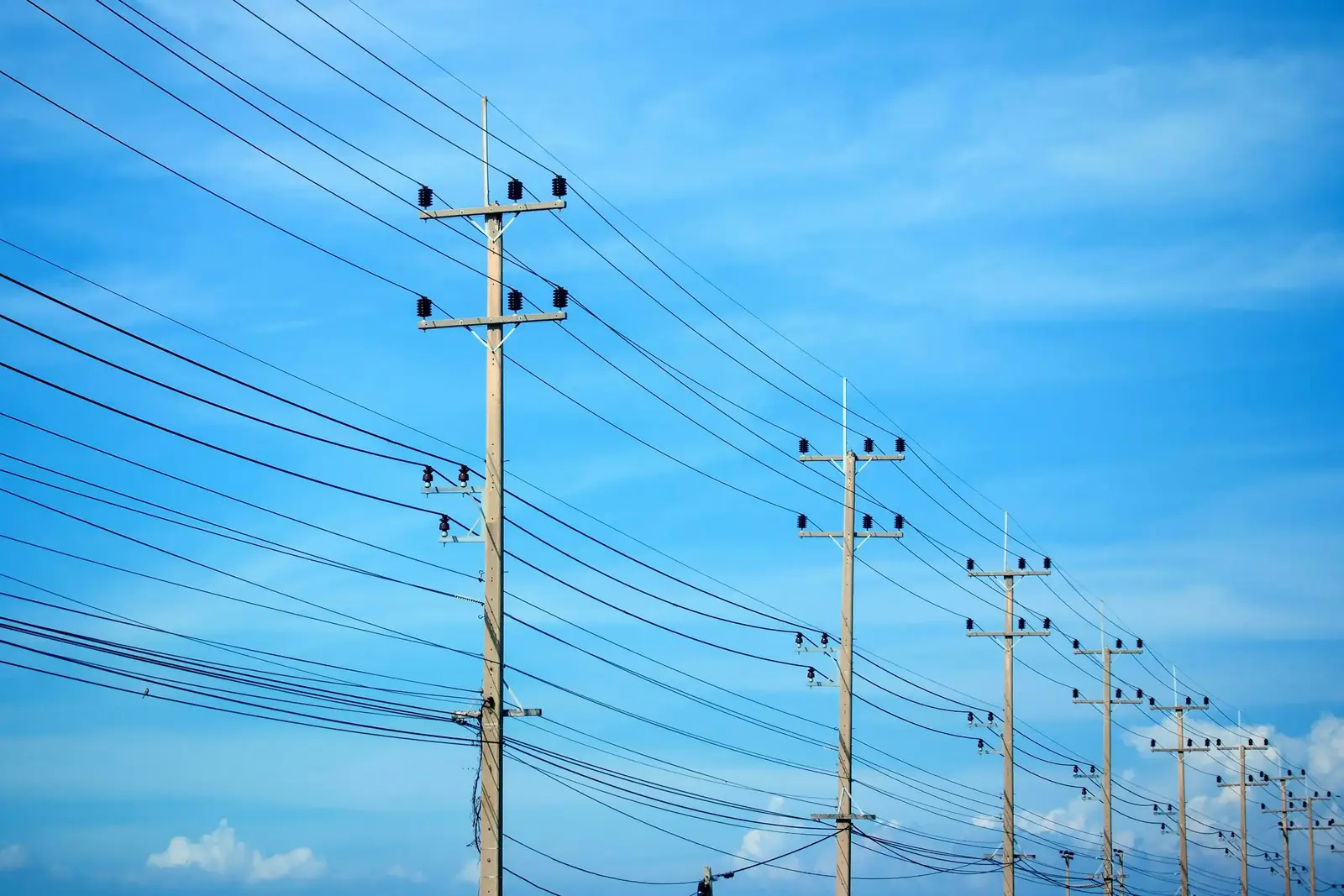
Undergrounding means replacing an existing overhead line with a cable line laid in the ground. It most often concerns medium-voltage lines running through forests, wooded areas and built-up land — where lines on poles are most exposed to wind, ice and falling trees.
Distribution system operators underground their networks to reduce the number and length of supply interruptions, cut the cost of maintaining corridors under the lines and free up land for development. Road and rail schemes and new housing estates crossed by an old line also call for undergrounding. We explain the reasons in more detail in Why operators underground MV lines.
For the contractor, undergrounding is a multi-stage job: the new line has to be built without interrupting supply for longer than necessary, connected during agreed outage windows, and only then can the old line — conductors, insulators, poles and foundations — be removed and the land tidied up.
- New MV and LV cable line with drilling and junctions
- Switching agreed with the operator, keeping outages to a minimum
- Removal of conductors, poles and pole-mounted substations, disposal of recovered material
Scope of works
What our undergrounding work includes
- 01
New cable line
Trenching, ducts, laying MV cable (e.g. XRUHAKXS, NA2XS(F)2Y) and LV cable, joints and terminations — to the design and the operator's standard.
- 02
Trenchless crossings
Directional drilling and pipe jacking under roads, driveways and watercourses, and wherever open trenching is impossible or uneconomic.
- 03
Junctions and tie-ins
Installation of MV (ZKSN) and LV cable junctions, terminations on transition poles, reconnection of existing customers.
- 04
Switching
Preparing and carrying out the connection of the new line on dates agreed with the operator, minimising interruptions.
- 05
Removing the old line
Dismantling conductors, fittings, MV and LV poles and pole-mounted substations; removal and handling of recovered material.
- 06
Acceptance
Measurements, as-built geodetic survey and handover documentation; restoring the land after dismantling.
How the works run
Stages of undergrounding a line
The key to undergrounding is coordinating the new build with the live network — customers must stay supplied.
Design check
We check on site the route of the new line, the tie-in points with the existing network, conflicts and the switching sequence set out in the design.
Scope of works
- site visit
- conflict analysis
- phasing plan
Result
- programme with outage windows
Permits and arrangements
Road occupation, traffic management, notifying landowners, agreeing outage dates and working arrangements near the live line with the operator.
Scope of works
- notices to authorities
- arrangements with the operator
- setting out the route
Result
- consents to enter the land
Earthworks and drilling
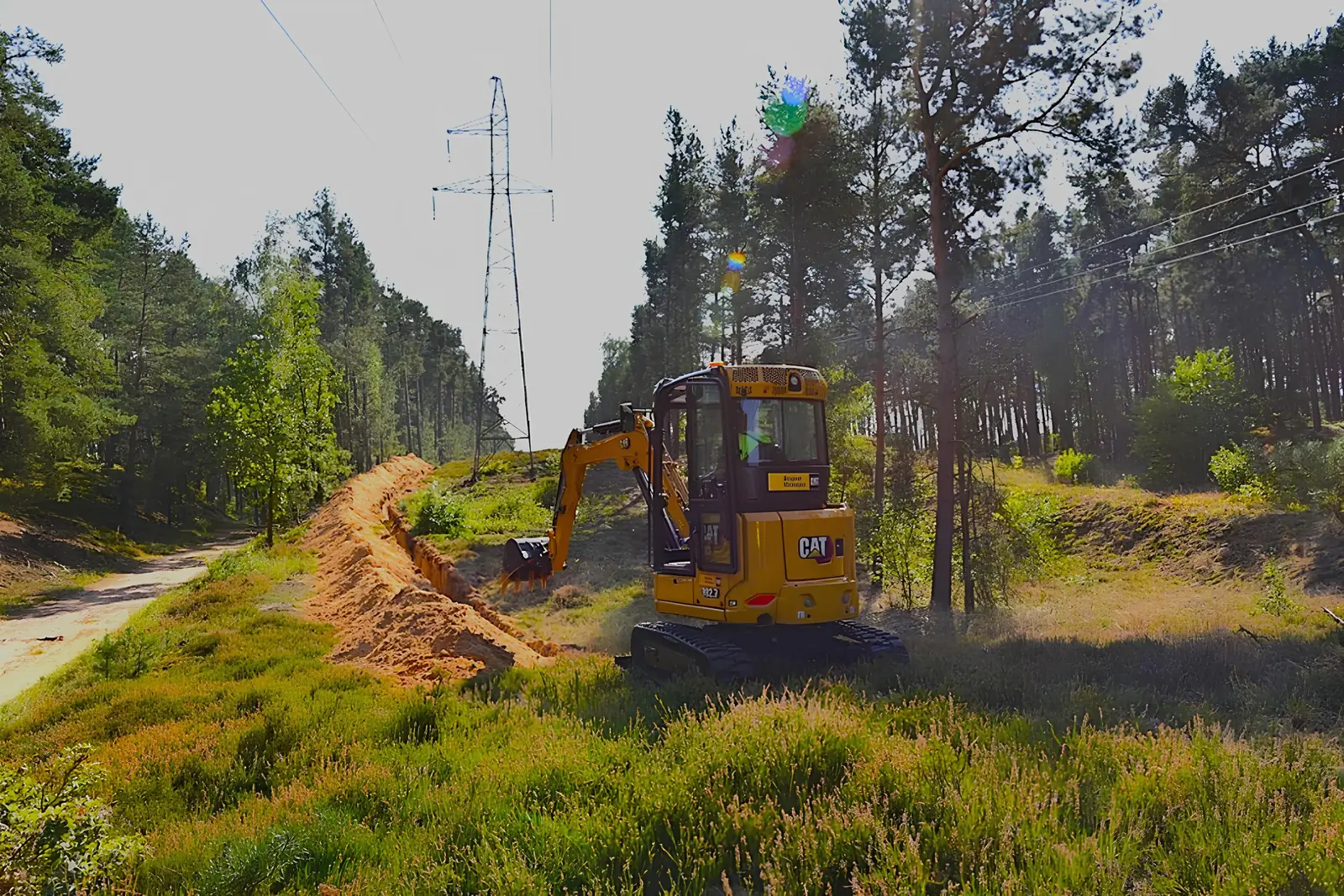
Trenches are often dug right next to the live overhead line; directional drilling takes the route under roads and other obstacles.
Scope of works
- machine and hand digging
- HDD
- protective ducts
Result
- route prepared
Cable laying and accessories
Laying the cables, fitting joints and terminations, installing ZKSN and LV junctions. The line is complete and checked before it is connected.
Scope of works
- cable laying
- joints and terminations
- cable junctions
Result
- new line ready to connect
Testing and switchover
After measurements and tests, on the agreed date, the line is connected to the network and customers are switched to the new supply.
Scope of works
- voltage tests
- connection within the agreed window
- customer switchover
Result
- new line in service
Dismantling and documentation
We remove the old overhead line and its poles, restore the land and hand over the as-built documentation with the geodetic survey.
Scope of works
- removing conductors and poles
- removing pole-mounted substations
- as-built survey
Result
- final acceptance report
Undergrounding in figures
Scope of three of our contracts
Figures from the client references. The contracts differ in scale and structure but share the same pattern: a new cable line and trenchless crossings.
| Contract | Cable line | Trenchless crossings | Other scope |
|---|---|---|---|
| Toruń — undergrounding of the MV 15 kV line GPZ Toruń Podgórz – Włocławek 3 | 5,725 m, 3× XRUHAKXS 1×150 mm² | approx. 600 m of directional drilling and pipe jacking | 2 ZKSN junctions, 6 sets of 15 kV MV joints, 4 sets of connector terminations |
| MV/LV network rebuild — 8 villages | 5,606 m, 3×NA2XS(F)2Y 1×150/25 mm² | approx. 550 m of directional drilling and SRS Ø160 pipe jacking | Bolewice, Siercz, Bukowiec, Panowice, Międzychód, Nowa Niedrzwica, Przytoczna, Zielomyśl |
| ENEA Operator — Niegosławice municipality | 3 × 5,715 m MV 1×150/25 mm²; LV 4×150 mm² 766 m | — | removal of 8.266 km of MV overhead line, 89 MV pole positions and 3 pole-mounted substations; 3 new MV/LV substations |
A case in point
Toruń: 5,725 m of cable in under two months
In autumn 2024, as a subcontractor to ZILINSKIS, we undergrounded the MV 15 kV line from the Toruń Podgórz primary substation (GPZ) to Włocławek 3, together with the Brzoza 1, Brzoza 2 and Brzoza 3 branches. The works ran from 30 September to 25 November 2024.
The scope covered an MV cable line of 3× XRUHAKXS 1×150 mm² with a route length of 5,725 m, around 600 m of directional drilling and pipe jacking, two ZKSN MV cable junctions (Brzoza 5 and Brzoza 6), six sets of 15 kV MV joints and four sets of connector terminations. The client confirmed in its reference that the works were performed properly, on the agreed dates and without defects.
The job is typical of undergrounding on the edge of a city: a large part of the route consists of crossings with roads and existing services, so the share of trenchless work is high and the drilling schedule sets the pace of the whole site. Full details are on the Toruń project page.
Projects
Undergrounding and network rebuilds
Toruń — MV 15 kV line undergrounding
Kuyavian-Pomeranian Voivodeship
ENEA Operator — MV 20 kV network, Niegosławice
Lubuskie Voivodeship
MV/LV network rebuild — 8 villages
Greater Poland / Lubuskie Voivodeships
„The works were performed with due care, in accordance with the terms of the contract and the applicable technical requirements.”
Photos
From our sites

Questions
Undergrounding — frequently asked questions
Do customers lose power during undergrounding?
We build the new line while the old one is still in service. Outages are needed mainly for connecting the new line and switching customers over. Their dates and duration are set by the operator; our job is to prepare everything so that the outage window is as short as possible.
Do you also remove the old line and poles?
Yes. On the ENEA Operator contract we removed 8.266 km of MV overhead line, 89 MV pole positions, 4 LV pole positions, 90 m of LV overhead line and 3 pole-mounted transformer substations.
What happens to the land after dismantling?
Once the poles and foundations are out we restore the land, and recovered material is removed and handed over as set out in the contract — usually to the operator or for disposal as waste.
Does undergrounding always need a trench along the whole route?
No. Under roads, driveways, watercourses or tree belts we use directional drilling. On our undergrounding jobs trenchless crossings have amounted to several hundred metres per contract — around 600 m in Toruń and around 550 m near Międzychód.
Do you work directly for the operator or for a contractor?
Both. We delivered the Toruń undergrounding and the network rebuild near Międzychód as a subcontractor to ZILINSKIS and PIWOWARSKI, and the Niegosławice contract as consortium leader working directly for ENEA Operator.
See also
Related topics
Why operators underground MV lines
Why DSOs replace MV overhead lines with underground cables: reliability, resilience to storms and icing, forests, safety — and how undergrounding is done.
Learn moreMV and LV cable lines
Construction, rebuilding and repair of MV 6–30 kV and LV 0.4 kV cable lines: trenching, drilling, cable laying, joints, terminations, testing and handover.
Learn moreMV overhead lines 6–30 kV
MV 6–30 kV and LV overhead lines: pole erection and replacement, line rebuilds, tie-ins to cable lines and removal of lines and pole-mounted substations.
Learn morePlanning to underground a line?
Send us the design or a description of the section — we will quote for construction, switching and removal.