
Services · Renewable energy
Solar farms — building the MV grid connection
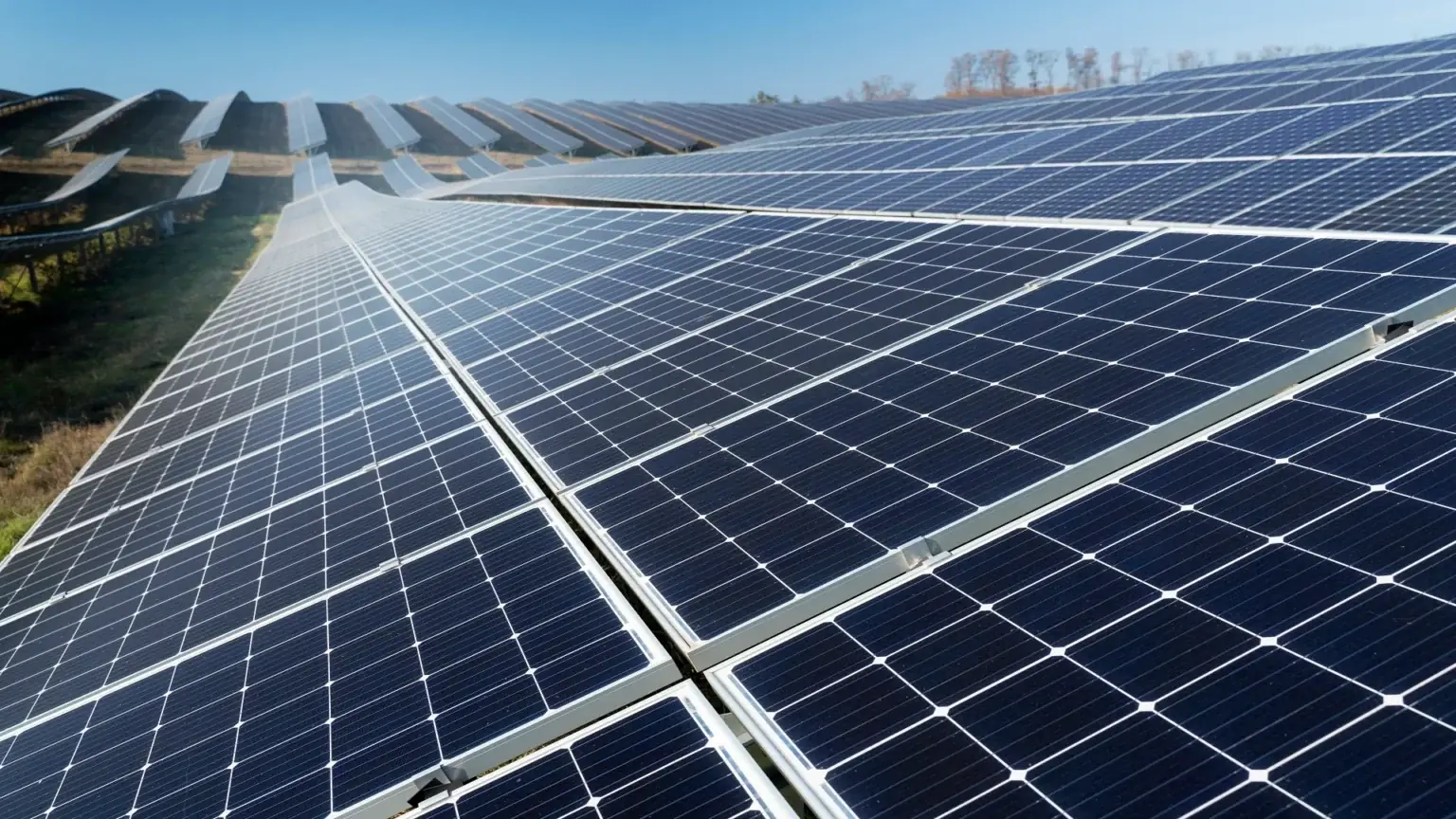
Panels are only the start. For a solar farm to export power, it needs an internal cable network, transformer substations, a point of connection and a line to the operator's grid. That part of the scheme — the medium-voltage electrical infrastructure — is what we build for developers and general contractors.
Our role
Contractor for the electrical side of a solar farm
A solar farm connected to the medium-voltage grid is made up of two worlds. The first is the panel field with its mounting structures, DC cabling and inverters. The second is the infrastructure that steps the inverter output up to MV and takes it to the operator's grid: LV/MV transformer substations, the internal cable network, MV switchgear or a cable junction at the point of connection, and the cable line linking the farm to the DSO's network.
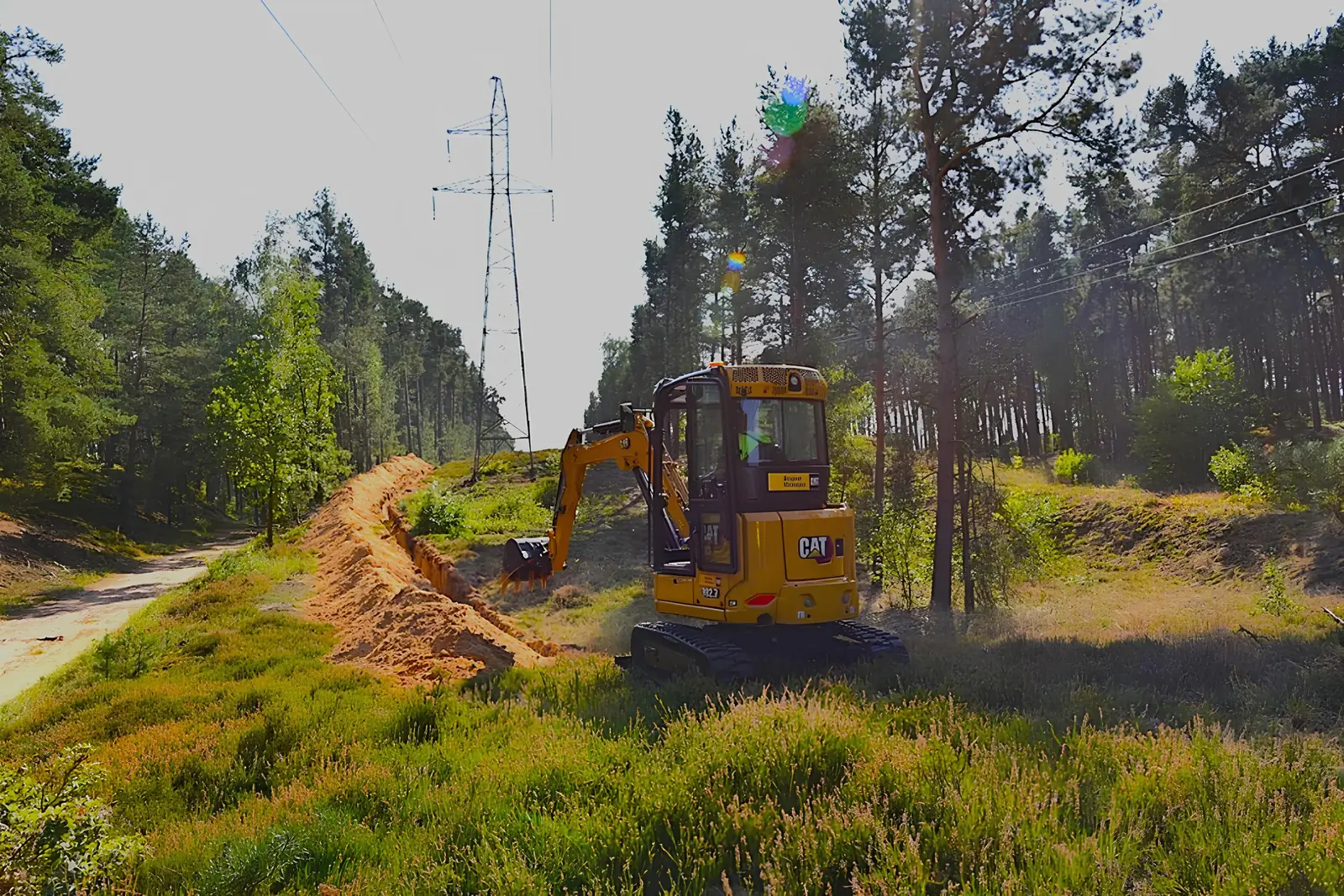
That second part is our everyday work. MV cable lines, ZKSN junctions, joints and terminations, transformer substations, drilled road crossings — these are the same works we carry out for network operators and their contractors. The scope can cover the farm's entire MV infrastructure or selected elements, such as just the connection line to the operator's network.
To be straightforward: our reference letters do not yet include a completed solar farm. What they do include is around 24.8 km of MV cable route, ZKSN junctions, MV/LV substations and a contract delivered directly for a network operator — the competences a successful grid connection depends on.
- Internal MV cable network between the farm's substations
- Installing transformer substations and MV junctions
- MV cable line to the point of connection on the operator's network
- Acceptance testing, records and support at acceptance
The developer's path
A solar farm's route to grid connection — in brief
Every connection follows the procedures and requirements of the particular operator. In outline it looks like this:
- 01
Connection conditions
The developer applies to the distribution system operator for grid connection conditions (warunki przyłączenia). The DSO assesses the network's capacity and issues the conditions — or refuses for lack of technical or economic capacity.
- 02
Connection agreement
A connection agreement (umowa o przyłączenie) is signed on the basis of the conditions, setting out the works on the developer's and the operator's side, the point of connection and the dates.
- 03
Design and permits
The farm and its connection infrastructure are designed and agreed with the operator; the developer obtains the required decisions and permits.
- 04
Construction
Panels and inverters are installed and the MV electrical infrastructure is built — this is where we come in.
- 05
Testing and acceptance
Acceptance tests, as-built documentation, survey and technical acceptance by the operator.
- 06
Energisation
Once the operator's requirements are met and formalities completed — including with the Energy Regulatory Office (URE) where the installed capacity requires it — the farm is connected and starts generating.
Connection elements
What a solar farm's grid connection consists of
The configuration depends on the farm's capacity and the connection conditions. Typical MV elements:
| Element | Function | BIGBUD's scope |
|---|---|---|
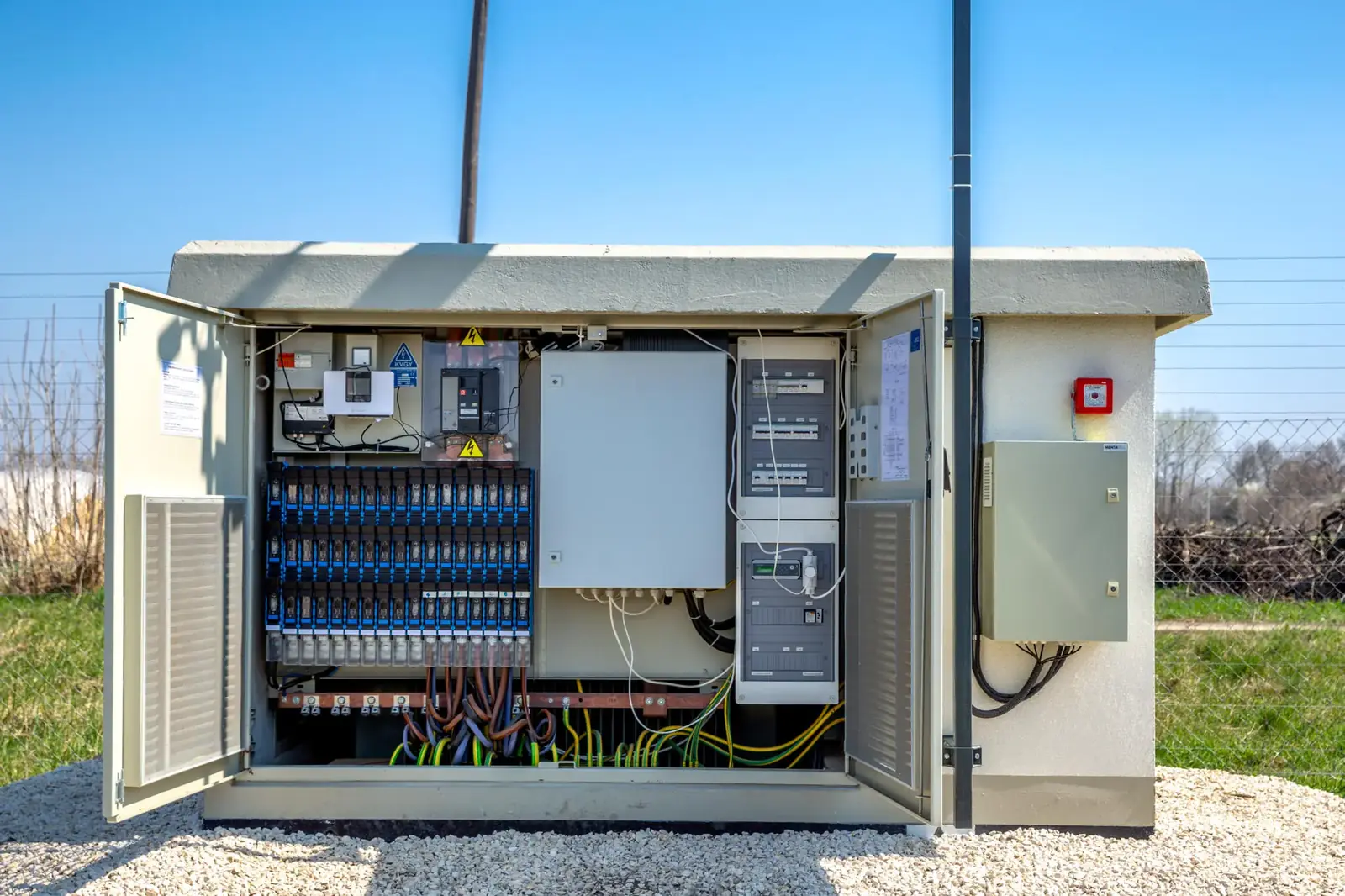
| LV/MV transformer substations | Step the inverter output up to the MV grid voltage; usually container substations next to the panel blocks | Bases and installation, MV and LV cable connections, procurement |
| Internal MV cable network | Connects the farm's transformer substations to the MV switchgear or junction | Trenching and drilling, MV cable laying, joints and terminations, testing |
| MV switchgear / junction at the point of connection | Ownership boundary between developer and operator, with switching equipment and metering | Setting the junction or substation, fitting out, connecting the lines |
| MV cable line to the DSO network | Links the farm to an existing MV line or the operator's switching station | Building the cable line, drilled road crossings, tie-in agreed with the DSO |
| Ducts and fibre | Ducts for control, telemetry and communication cables | Protective ducts and ducting in the shared trench |
| Connection via a customer HV/MV substation (larger farms) | HV/MV substation for larger capacities, connected to the 110 kV network | MV side: collector cable lines and connections; HV works are done by specialist contractors |
How the works run
How we build a solar farm's MV infrastructure
Reviewing the conditions and design
We study the connection conditions, the agreement and the design, and check the route of the line to the operator's network, crossings and access.
Scope of works
- Document review
- Route walkover
- Identifying drilled crossings
Result
- Quotation and programme
Procurement
We order MV cables, accessories, junctions and — where in scope — transformer substations, allowing for long manufacturing lead times.
Scope of works
- Materials schedule
- Purchase orders
Result
- Delivery plan
Internal MV cable network
We build the lines between the farm's substations — usually in parallel with the mounting structures and panels, coordinated with that contractor.
Scope of works
- Trenching and cable laying
- Protective ducts
- Joints and terminations
Result
- Farm's internal network
Substations and point of connection
We install the transformer substations and the MV junction or switchgear at the point of connection, and carry out earthing and cable connections.
Scope of works
- Bases and installation
- Earthing
- MV connections
Result
- Substations ready for testing
Connection line to the DSO network
We build the MV cable line to the point specified in the connection conditions and — on a date agreed with the operator — tie it into the network.
Scope of works
- Trenching and HDD
- Jointing and terminating
- Tie-in agreed with the DSO
Result
- Farm connected to the operator's network
Testing, records, acceptance
We carry out acceptance tests on the cable lines, the as-built survey and compile the documentation for acceptance by the operator and the developer.
Scope of works
- Cable tests and measurements
- As-built survey
- As-built documentation
Result
- Infrastructure ready for energisation
MV competence
MV cable lines we have built
These are not solar farm projects — they are jobs on network operators' grids. We show them because exactly these works (MV cable lines, ZKSN junctions, MV/LV substations, directional drilling) make up a solar farm's grid connection.
ENEA Operator — MV 20 kV network, Niegosławice
Lubuskie Voivodeship
Toruń — MV 15 kV line undergrounding
Kuyavian-Pomeranian Voivodeship
Konin — RS Maliniec 15 kV switching station
Greater Poland Voivodeship
Photos
From our sites
FAQ
Solar farms — developers' frequently asked questions
Do you build the whole solar farm?
We specialise in the MV electrical side: the internal cable network, transformer substations, junctions and the connection line. Mounting structures, panels and DC cabling are usually installed by another contractor; we coordinate with them on site.
Have you completed solar farms before?
Our reference letters do not yet include a completed solar farm. They cover MV cable lines, junctions, MV/LV substations and drilling on operators' networks — the works a farm's connection is made of. All letters are on the References page.
Do you help obtain connection conditions?
The application is made by the developer, often with the designer's help. At an early stage we can assess the connection route from a contractor's perspective — obstacles, crossings, land access — which helps set a realistic budget and programme. More in Connecting a solar farm to the MV grid.
How long does the MV infrastructure take to build?
It depends on the length of the connection line, the number of substations and equipment lead times — substations and switchgear usually take longest to arrive. As an example, we built a 2,350 m MV 15 kV cable line in Bolewice in 18 days (a job on an operator's network, not a solar farm).
Do you carry out the tie-in to the operator's network yourselves?
Work on the tie-in to the live network is done on the date and terms agreed with the operator, once its staff have made the work area safe. The split of works between the DSO and the developer is set by the connection agreement.
Do you work for developers or general contractors?
Both. See the pages for renewable investors and for general contractors.
See also
Related services
Wind farms
Electrical infrastructure for wind farms: MV cable network between turbines, MV junctions and switchgear, lines to the HV/MV substation and DSO grid.
Learn moreMV and LV cable lines
Construction, rebuilding and repair of MV 6–30 kV and LV 0.4 kV cable lines: trenching, drilling, cable laying, joints, terminations, testing and handover.
Learn moreMV/LV substations
Construction of MV/LV transformer substations, ZKSN and LV cable junctions, replacement of pole-mounted units, MV and LV cable connections and testing.
Learn moreGetting a solar farm ready for connection?
Send us the connection conditions and the MV infrastructure design — we will quote with a works programme.